
Sources for Saratoga Springs Address History
A house history is a sequence of records, not one old-name search. The current parcel is the anchor. The deed index supplies legal transfers. A directory or census gives a household snapshot. A newspaper can mark a move, death, sale, or local event. A city permit can date a project after the city began maintaining municipal files. The era table separates coverage and meaning.
| Source | Years or status | Where held | What it shows |
|---|---|---|---|
| Utah County Recorder | Online start and cutoff not stated | Land Records and counter | Deeds, liens, plats, parties, legal description, dates |
| Recorded abstracts | Current and historical rows; sample has 2009 to 2017 | County abstract and document searches | KOI, entries, parties, consideration, cross-references |
| FamilySearch county records | 1850 to 1962 | Browse images | Deed, mining, court, birth, death, marriage material |
| City records | After incorporation in December 1997 | Recorder and GRAMA | Notices, annexations, permits, plans, elections |
| Cityworks permits | Public portal used since January 1, 2024 | Building and Cityworks | Applications, approved plans, review trail; public history gap |
| Directories and census | Regional years; local run unconfirmed | FamilySearch, BYU, libraries, census routes | Name, address, occupation, relation, household clues |
| Newspapers and cemetery | Utah Digital Newspapers 1850 to 2025; cemetery start unknown | Marriott, city viewer | Obituary, event, interment, lot, marker, locality clue |
The Recorder’s online cutoff year and comprehensive copy fees were not located. That is a research limit, not proof that older deeds are absent.
Freeze a Saratoga Springs Previous Residents Parcel
Start with the Utah County address form. Enter number, direction, street, street type, and city/location. Then run the same property in the Assessor or serial form. Save the owner name as displayed, parcel serial, situs address, owner mailing address, value or exemption fields, subdivision, lot, block, and legal description. If a street label does not work, the serial may still find the parcel.
Open the Utah County Parcel Map and note the city, boundary, adjacent lots, and historic parcel date if used. The historic map date is the date entered into the online system, not necessarily the deed’s recording date. The map is reference-only and not a survey. A current parcel may have grown from a larger tract or changed legal description.
The county recording search is the next step after the parcel is fixed.
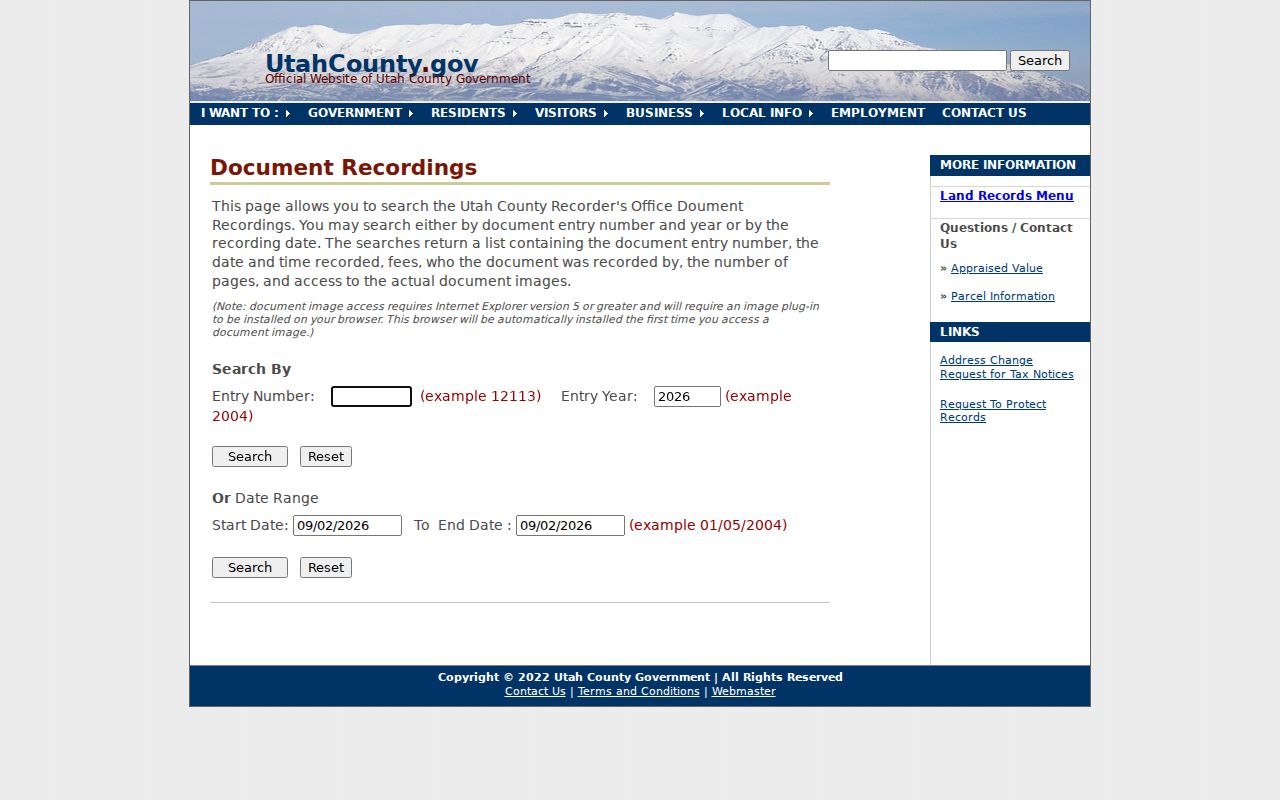
Keep a copy of the search date. A modern parcel result changes as documents and tax information update.
Saratoga Springs Previous Residents Deed Chain
The Recorder’s Party Name form searches people tied to recorded instruments, and KOI means kind of instrument. Use the abstract or recordings list to find the deed conveying the parcel to the current owner. Note grantor, grantee, entry and year, recording date, KOI, consideration, legal description, and cross-reference. Then search the seller as a party around the preceding date. Continue from grantee to grantor as each older instrument is found.
- Record the current serial and legal description.
- Search address or serial, then identify the current purchase deed.
- Open or request the instrument image and write down grantor and grantee roles.
- Search the seller in the Recorder party-name form with a date or KOI filter.
- When the description changes, check the plat, subdivision, merger, or cross-reference before continuing.
The Recorder does not conduct title research by phone, interpret instruments, prepare documents, or give legal advice. An abstract is an index trail, not a guarantee that every transfer, lien, or description change is complete.
- Grantor
- The party conveying an interest in an instrument.
- Grantee
- The party receiving an interest.
- Chain of title
- The linked sequence of recorded transfers and legal descriptions.
- Legal description
- The formal land description in a deed or plat, which may outlast a street label.
Saratoga Springs Previous Residents HOA Abstract
A sampled Saratoga Springs abstract for Lakeside at Saratoga Springs Homeowners Association shows why one parcel can have more than sale deeds. Visible rows include party and interest names, related party or name, entry number and year, KOI, document date, recording date and time, consideration, and X or R cross-references. The sample includes a 2017 warranty-deed-type row, a 2017 covenant-related row, a 2016 declaration of covenants, 2015 bylaws, a 2011 deed, and a 2009 release or reconveyance-style row.
Those entries can explain the development era and legal framework of a house. They do not identify every past household. A recorded association name is not a membership roll, and a covenant does not prove who occupied a parcel. Use the instrument image and legal description to distinguish a common-interest document from a transfer of ownership.
Saratoga Springs Previous Residents Before 1997
Saratoga Springs incorporated in December 1997. Before that, a house or tract in the present city area may have appeared under Utah County, a rural precinct, a post office, a farm, a resort, Lehi, Provo, or a subdivision label. This is why a name can vanish when a researcher searches only the current city. The 1884 Beck resort near the hot springs is a place-name clue, not a pre-existing municipal record set.
FamilySearch’s Utah County Records collection covers 1850 to 1962, and the mining-deed catalog covers 1893 to 1896. Regional directory guidance lists 1884 and 1888 titles and Utah State Gazetteer volumes in 1900 and 1912 through 1931. Search locality variants, then use the parcel or newspaper bridge to decide whether the person belongs to the present Saratoga Springs area.
Saratoga Springs Previous Residents Directory Years
No official Saratoga Springs city-directory run was verified. FamilySearch’s national city and business collection and BYU guidance provide regional routes. A directory entry may show name, residence year, street address, residence place, occupation, publication title, spouse, employer, owner or renter mark, and an alphabetical or street section. Treat a regional Provo or Utah County entry as a regional example until the volume’s title page confirms the place.
- Find the person or surname in the closest available year.
- Copy the exact address, household notation, volume, publisher, page, and abbreviation key.
- Repeat in earlier and later editions, allowing initials, spelling, occupation, and street changes.
- Pair the address with a census schedule and county deed or abstract record.
- Use a newspaper, obituary, probate file, or cemetery entry to test a move, death, or heir relationship.
Federal census schedules become public under a 72-year release rule. A directory and census both describe a moment. Neither proves a complete list of all people who lived at the house.
Saratoga Springs Previous Residents in Newspapers
Utah Digital Newspapers is a strong local-history route. An August 18, 2026 city-library notice describes more than nine million pages from 400 Utah newspapers covering 1850 to 2025. Search a former owner’s name, the address, subdivision, “Saratoga Springs,” “Utah County,” “Beck,” “hot springs,” “probate,” “obituary,” and development names. Notices can supply a date clue for a sale, death, move, annexation, or family connection.
Pair a newspaper obituary with the Saratoga Springs Cemetery viewer, an eligible death record, probate index, or recorder instrument. A death notice is not a certified death record. Probate may identify an heir or personal representative when public, but family filings can be private or redacted. The library catalog and Ask a Librarian route help when a newspaper query needs a volume or nearby-library lead.
Annexation Is an Address Clue
Modern city labels can obscure an older land trail. A January 2025 Pony Express Well Site public-hearing record names parcels 13:028:0100 and 13:028:069. A March 2026 Meadows at North Lake 2 staff report names 145 N 1700 W, nineteen lots, a recently annexed area from Lehi City, and a plat recorded December 23, 2025. These are concrete examples of why current city, former city, parcel serial, street address, plat, and date belong in the same note.
When a prior resident search fails, search the Recorder legal description and serial, then look for public notices, master-development plans, tax history, permit dates, and newspapers. Saratoga Springs’ rapid development means a street number may be newer than the tract, subdivision, or city label underneath it.
The city’s approved development-plan index supplies local plan names and address-era context.
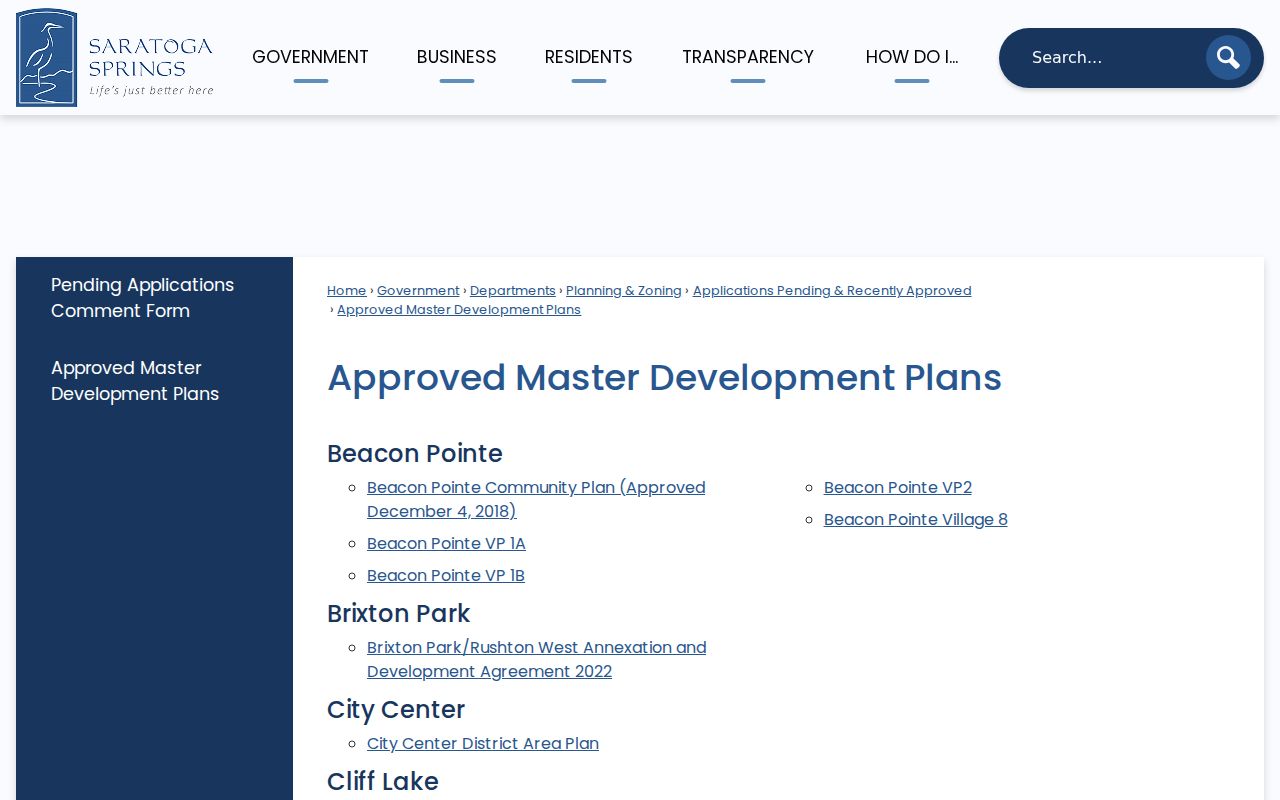
Use a plan to identify a development era, then verify a person through a named record source.
When the Online Index Stops
The county does not publish a clean online starting year or cutoff for all land records. When the web index stops, ask the Recorder about counter and mail access, certified copies, older books, or images that do not render. The State Archives provides government series and indexes from 1850. FamilySearch supplies Utah County browse images from 1850 to 1962. A focused request should name the parcel, address, record type, and date range.
The city and library did not publish a local house-history guide. Use the catalog, Ask a Librarian, Utah Historical Society, State Archives city and county guide, BYU, FamilySearch, and GRAMA. Saratoga Springs can request existing municipal notices, permits, annexation records, or plans when maintained and releasable. GRAMA cannot make an agency create a new resident history.
House History Has Privacy Limits
Previous residents are a historical subject, but the trail can still touch living people. Do not treat an owner mailing address as a home, a directory entry as a current resident, or a cemetery name as a complete family file. Renters and household members may not appear. Safe at Home and at-risk voter withholding can keep actual addresses and other identifiers out of public records.
Lawful house-history use. Use deeds, directories, census schedules, newspapers, and public plans for family history, preservation, and personal research. Do not use an address trail to stalk, monitor, threaten, intimidate, or harm anyone.
For a suspicious deed or property-record letter, verify it with the Utah County Recorder and consider the county’s free Property Watch alert service. For a wrong match, document the entry, parcel, instrument, or date and contact the custodian. Never overwrite an old record’s spelling simply because a modern search expects another form.